Dover Street
The Captain and Ann BarbaraDover Street is the South End Boston slum thoroughfare where the Antin family lived after the failure of the Wheeler Street grocery store, and it becomes in Mary Antin's memoir the central symbol of her Americanization—at once a prison of poverty and degradation and the ground on which she overthrew that poverty, planted the seeds of her intellectual freedom, and entered the public library that she called her palace.
The Street and Its Character
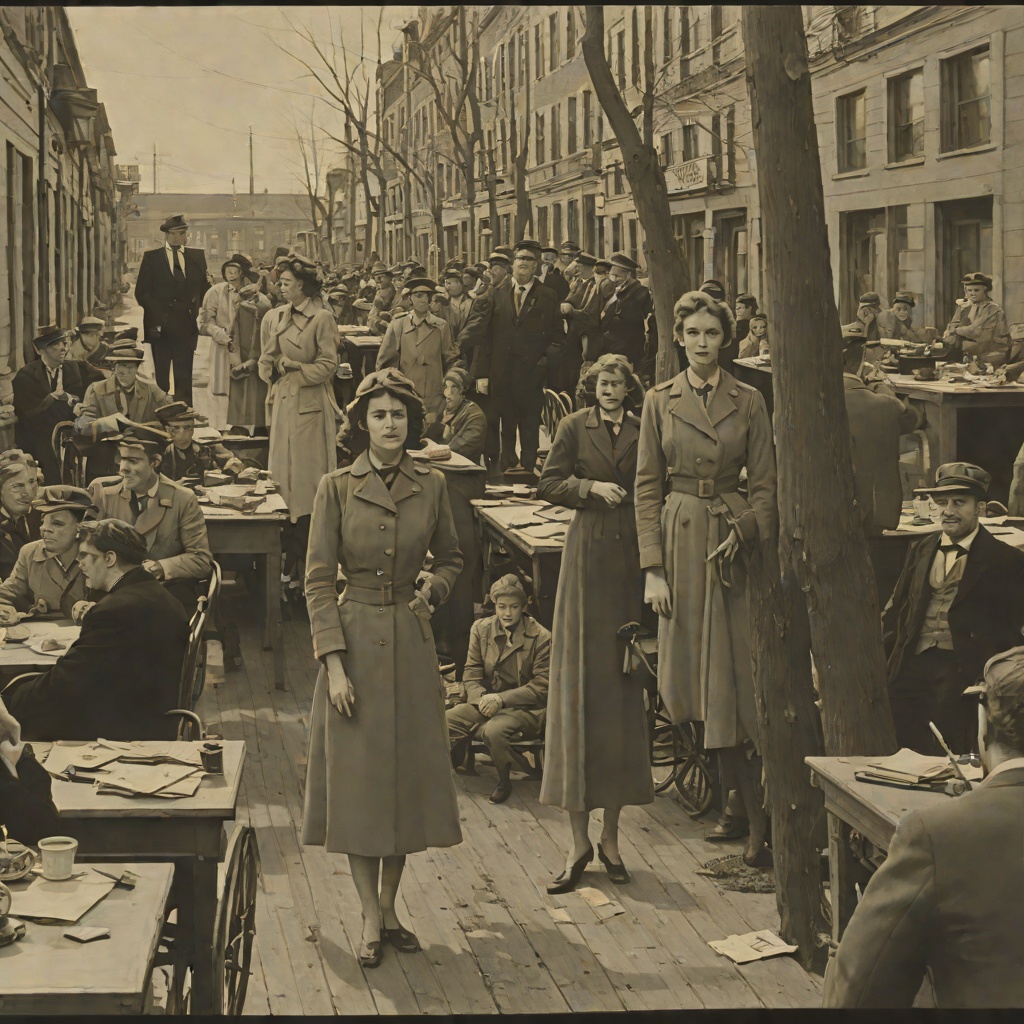
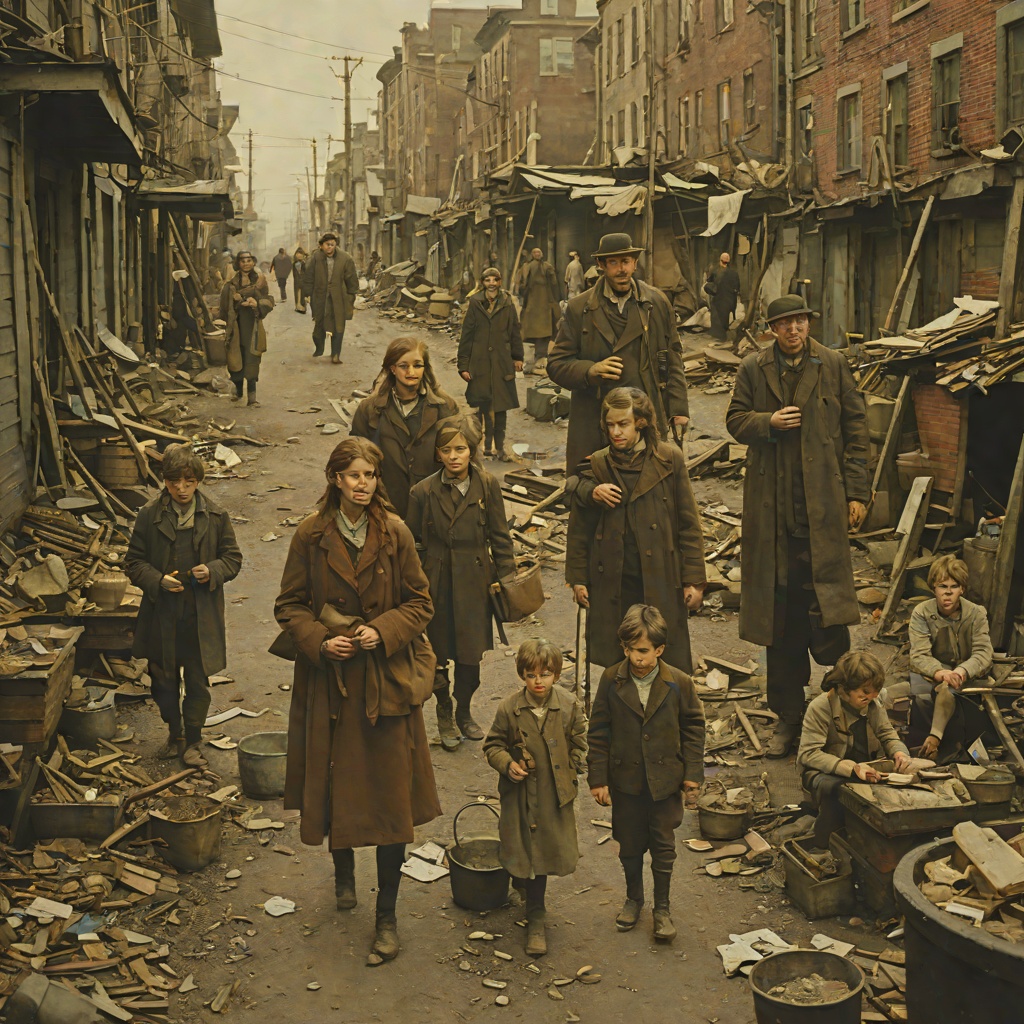
Dover Street is a noisy thoroughfare cut through a South End slum, in every essential the same as Wheeler Street, the previous Antin residence. Mary Antin insists that any street in the slums, turned down at random and called by whatever name one pleases, shows the same fashions of life, death, and endurance: every one of those streets is a rubbish heap of damaged humanity, requiring a powerful broom and an ocean of soapsuds to clean out. The street is intersected, near its eastern end where the Antins lived, by Harrison Avenue, which is to the South End what Salem Street is to the North End—the heart of the South End ghetto for the greater part of its length, although its northern end belongs to the realm of Chinatown. Harrison Avenue's multifarious business bursts through the narrow shop doors and overruns the basements, the sidewalk, and the street itself in pushcarts and open-air stands, while its multitudinous population bursts through the greasy tenement doors and floods the corridors, the doorsteps, the gutters, and the side streets, pushing in and out among the pushcarts all day long and half the night besides. Rarely as Harrison Avenue is caught asleep, even more rarely is it found clean; nothing less than a fire or flood would cleanse this street, and even Passover cannot quite accomplish this feat, for although the tenements may be scrubbed to their remotest corners, the cleansing stops at the curbstone, with a great deal of the filthy rubbish accumulated in a year pitched into the street, often through the windows, and what the ashman on his daily round does not remove is left to be trampled to powder, in which form it steals back into the houses from which it was so lately removed.
The Antin Family's Arrival and Dwelling
The family had no particular reason for coming to Dover Street; it might just as well have been Applepie Alley. For Mary's father had sold, with the goods, fixtures, and good-will of the Wheeler Street store, all his hopes of ever making a living in the grocery trade, and she doubts if he got a silver dollar the more for them. They had to live somewhere, even if they were not making a living, so they came to Dover Street, where tenements were cheap—by which she means that rent was low, though the ultimate cost of life in those tenements, in terms of human happiness, is high enough. Their new home consisted of five small rooms up two flights of stairs, with the right of way through the dark corridors. In the parlor the dingy paper hung in rags and the plaster fell in chunks; one of the bedrooms was absolutely dark and air-tight; and the kitchen windows looked out on a dirty court, at the back of which was the rear tenement of the estate. To them belonged, along with the five rooms and the right of way aforesaid, a block of upper space the length of a pulley line across this court, and the width of an arc described by a windy Monday's wash in its remotest wanderings.
The Struggle Against Poverty
In Dover Street the dragon poverty gripped Mary for a last fight, but she overthrew the hideous creature and sat on his neck as on a throne. The air in Dover Street was heavy with evil odors of degradation, but a breath from the uppermost heavens rippled through, whispering of infinite things. There was often no loaf on the table, but the hand of some noble friend was ever in hers. The night in Dover Street was rent with the cries of wrong, but the thunders of truth crashed through the pitiful clamor and died out in prophetic silences. In Dover Street she was shackled with a hundred chains of disadvantage, but with one free hand she planted little seeds, right there in the mud of shame, that blossomed into the honeyed rose of widest freedom. Mary calls Dover Street her fairest garden of girlhood, a gate of paradise, a window facing on a broad avenue of life—and simultaneously a prison, a school of discipline, a battlefield of sordid strife.
The Public Library as Counter-Space
Against the squalor of Dover Street stands the Boston Public Library, which Mary calls her palace—hers because she was a citizen, hers though she was born an alien, hers though she lived on Dover Street. She loved to lean against a pillar in the entrance hall, watching the people go in and out: groups of children hushing their chatter at the entrance and skipping, whispering and giggling in their fists, up the grand stairway, patting the great stone lions at the top, with an eye on the aged policemen down below; spectacled scholars coming slowly down the stairs, loaded with books, heedless of the lofty arches that echoed their steps; visitors from out of town lingering long in the entrance hall, studying the inscriptions and symbols on the marble floor. She loved to stand in the midst of all this and remind herself that she was there, that she had a right to be there, that she was at home there. All these eager children, all these fine-browed women, all these scholars going home to write learned books—she and they had this glorious thing in common, this noble treasure house of learning. It was wonderful to say, This is mine; it was thrilling to say, This is ours. She visited every part of the building that was open to the public, spending rapt hours studying the Abbey pictures, repeating to herself lines from Tennyson's poem before the glowing scenes of the Holy Grail, and standing mute before the Prophets in the gallery above while echoes of the Hebrew Psalms she had long forgotten throbbed somewhere in the depths of her consciousness. The Chavannes series around the main staircase she did not enjoy for years, thinking the pictures looked faded and their symbolism somehow failed to move her at first.
Narrative Significance
Dover Street functions in the memoir as the culminating test of Mary's Americanization, the place where the material poverty of the immigrant tenement is set against the spiritual wealth of American institutions. The contrast between the dark, air-tight bedroom and the lofty arches of the library, between the filthy court and the grand stairway, is the spatial embodiment of her transformation. It is also the scene of her second great transformation of life, as truly as her coming to America was the first great transformation—the moment when nature study and the intellectual life took first place in her affections, and when she began to look forward to the meetings of the Natural History Club. The street that was a prison became the ground of her liberation, and the mud of shame became the soil in which she planted the seeds of her widest freedom.